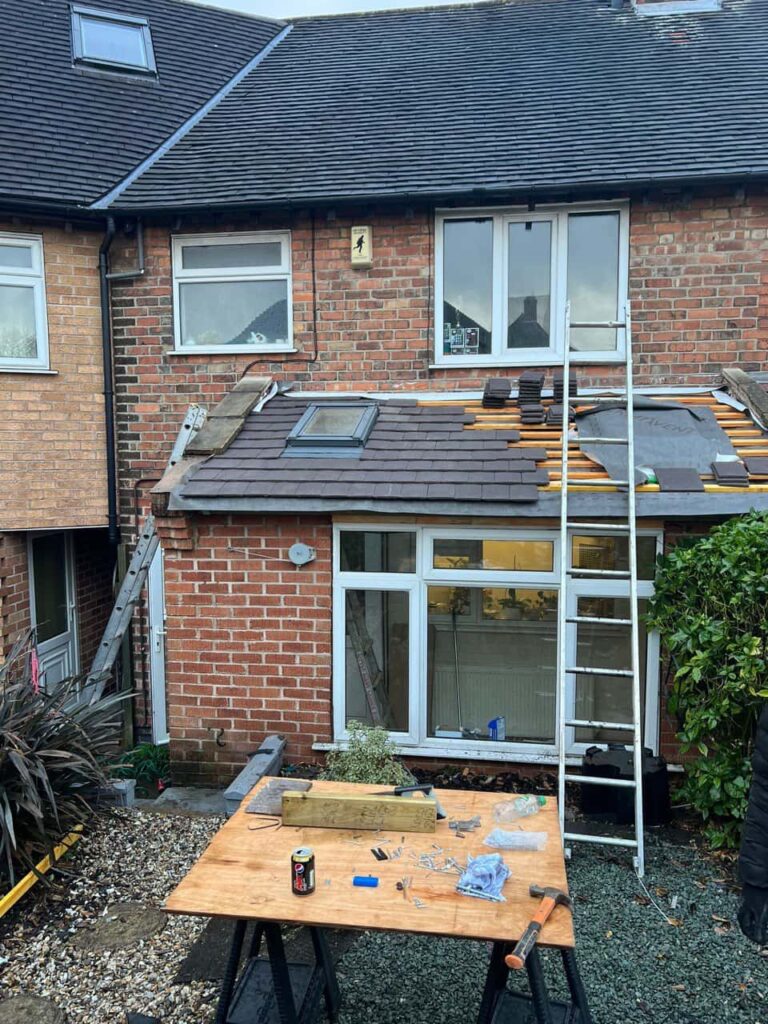
Strong winds and severe weather can place considerable stress on a roof. Loose or displaced tiles, damaged flashing, blocked gutters and exposed roof areas can develop during periods of heavy rain and high winds. Some damage may be immediately visible, while other problems can remain hidden until water enters the property.
For homeowners in Warminster, Wiltshire, knowing what to do after severe weather can help identify roofing problems early and reduce the risk of further damage. A professional roof inspection can establish the condition of the roof and identify repairs that may be required.
Check for Visible Signs of Roof Damage
After severe weather has passed, look for obvious signs of damage from ground level where it is safe to do so. Do not climb onto the roof to inspect it yourself, particularly when tiles or other components may have become unstable.
Potential warning signs include:
- Missing or displaced roof tiles
- Cracked or broken tiles
- Loose ridge or verge components
- Damaged flashing
- Sagging sections of the roof
- Blocked or damaged gutters
- Water stains on ceilings or walls
- Debris around the property that may have come from the roof
Visible damage does not always indicate the full extent of the problem, so further professional assessment may be appropriate.
Common Types of Storm-Related Roof Damage
Missing or Displaced Tiles
High winds can lift or move roof tiles, leaving gaps through which rainwater can enter. Even when only a small number of tiles have moved, the exposed area beneath them may be vulnerable to further weather damage.
Damaged or missing tiles can often be replaced once the surrounding roof has been checked for additional movement or damage.
Damaged Flashing
Flashing around chimneys, roof junctions and other vulnerable areas can become loose or damaged during severe weather. Defective flashing may allow rainwater to penetrate beneath the roof covering.
The appropriate repair will depend on the condition and extent of the damage.
Ridge and Verge Damage
Ridge tiles and roof verges can be exposed to strong winds because of their position on the roof. Loose mortar, displaced components or damaged sections can create potential water entry points.
These areas should be checked following significant weather, particularly if visible movement or debris has been noticed.
Gutter and Roofline Problems
Heavy rain and wind can contribute to blocked, damaged or displaced gutters. If rainwater cannot flow correctly, it may overflow towards the roof or walls.
Clearing debris and repairing damaged sections can help restore proper water flow and reduce the risk of further moisture-related problems.
Signs of Hidden Water Damage
Not all storm damage is visible from outside the property. Water may enter through a damaged section of the roof and travel along the underlying structure before becoming noticeable indoors.
Look for damp patches, discolouration, peeling paint, damaged plaster or water marks on ceilings following severe weather.
If these signs appear, the source should be investigated rather than simply treating the visible area inside the property.
What to Do After Storm Damage
Once severe weather has passed, prioritise safety. Avoid climbing onto the roof or approaching unstable sections.
Documenting visible damage from a safe position can be useful when discussing the problem with a roofing professional. If water is entering the property, dealing with the source promptly can help limit further deterioration.
A professional inspection can then determine which parts of the roof have been affected and what repairs are appropriate.
Why Professional Roof Inspections Matter
Storm damage can involve more than a single broken tile. Wind may loosen surrounding components, while heavy rainfall can expose weaknesses around flashing, valleys and roof junctions.
A professional inspection allows the roof to be assessed systematically. This can help identify both obvious and less visible defects and ensure that repairs address the underlying problem.
Storm Damage Roof Repairs in Warminster
For homeowners in Warminster, Wiltshire, MCM Roofing Repairs Warminster provides professional roof repair services following wind and storm damage.
Whether the problem involves displaced tiles, damaged flashing, ridge and verge issues or water ingress, the appropriate repair should be based on the condition of the affected roof areas.
Professional assessment and targeted repairs can help restore the roof and reduce the likelihood of the same defect causing further problems.
Conclusion
Severe weather can cause a range of roofing problems, from missing tiles and damaged flashing to blocked gutters and hidden water ingress. Checking for visible warning signs after a storm and arranging a professional inspection where necessary can help identify problems before they become more extensive.
If your roof in Warminster, Wiltshire has been affected by strong winds or severe weather, contact MCM Roofing Repairs Warminster to discuss the damage and arrange a professional roof assessment.
Call us on: 01985 802 992
Click here to find out more about MCM Roofing Repairs Warminster
Click here to complete our contact form and see how we can help with your roofing needs.